Round ligament pain is a common occurrence during the progression of a normal pregnancy. Women often begin to experience it during the second trimester, but it can certainly occur earlier in gestation, especially if it is not your first pregnancy. Sometimes round ligament pain can be managed and pain improves over time, other times it lingers through the remainder of pregnancy. In this post, we’re going to cover what the round ligament is, why it can become painful, and what you can do to reduce or manage the associated pain.
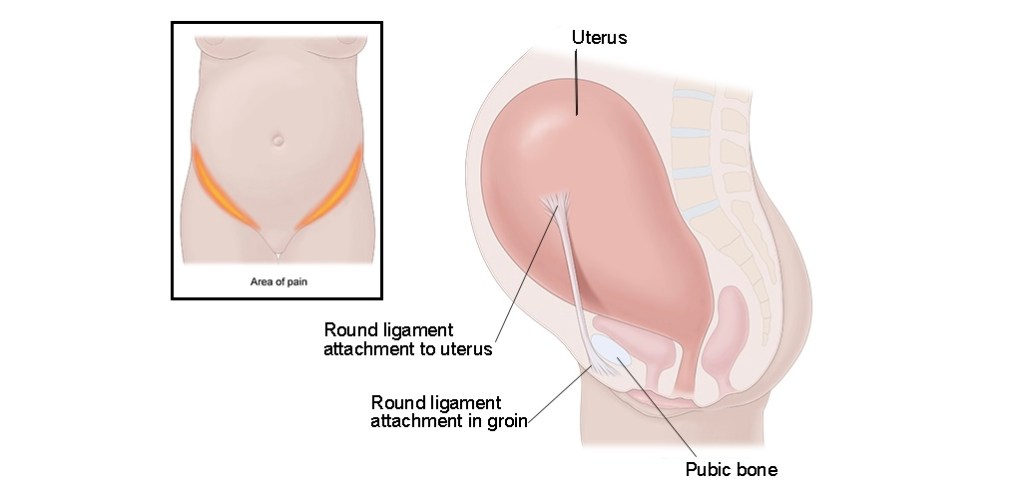
What is the round ligament?
This ligament is connective tissue that looks and functions a bit like a rope tethering your uterus to your pelvic bones. There is one on each side of your uterus and its main job is to support the uterus and hold it in place. The round ligaments stretch from their normal length of 2” to almost 12” at full term.
Why does it hurt? And what does it feel like?
As the uterus grows over the course of a pregnancy, the ligaments are under more stress and strain due to being stretched. Additionally, when the uterus is nearing full term, the deep abdominal muscles are also stretched and therefore less able to help support the weight and position of the uterus, which further strains the round ligaments.
Round ligament pain can usually be described as a sudden sharp pain on one side of the lower abdomen. It often occurs when Mom has made a sudden reaching or twisting movement, like when getting out of bed or out of the car.
What can I do about managing this pain?
Although round ligament pain can be persistent (and hurts like a bitch!), there are a few options for addressing the source of it and reducing pain. Here are my 3 recommendations for managing round ligament pain:
1. Strengthen your abdominal muscles
As mentioned above, once your uterus is big enough expand out of your pelvis, the round ligaments rely on the abdominal muscles for extra support. Unfortunately, it is not uncommon during pregnancy to lose strength in our core as the muscles are also stretched to their limits. Ensuring you keep your abdominal muscles engaged and strong as your belly grows can make a big difference in reduce the strain on your round ligaments. The first step to stronger abs during pregnancy is improving the mind-muscle connection and activating the deep layers of your core. Once you master that, you want to progressively challenge those muscles to gain strength!
Click here to learn more about Strength in Pregnancy, one of Naptime Fitness’ signature programs.
2. Consider posture during daily activities
Because strengthening muscles takes time, awareness of how you move your body during regular daily activities can be a helpful tool in the meantime. Making sure not to twist your torso too quickly or make sudden reaching movements can greatly reduce the occurrence of round ligament pain. Learning to engage your deep core muscles before changing positions (like when getting in or out of bed, getting up off the floor or couch, etc) can reduce pain by using your muscles for extra support of your uterus/baby instead of solely the round ligaments.
1. See a pelvic floor physical therapist
Pain can often have many factors that contribute to its existence or severity. A pelvic floor PT will be able to evaluate your pain and determine what else could be influencing it in your specific body. Round ligament pain is not typically indicative of a larger problem, but it could easily be confused with other abdominal aches or pains that should be evaluated, such as pubic symphysis dysfunction, hip injuries, and Braxton hicks contractions.
Round ligament pain is not typically very long lasting and can often be relieved by resting or gentle massage. If you’re experiencing pain that’s not getting better, or getting worse, please contact your medical provider.
If you’re pregnant and want to reduce all sorts of aches and pains (including round ligament pain, low back pain, and shoulder pain) through efficient AF strength training at home, check out our weekly workout plans in Strength in Pregnancy, as well as other free resources and content on Instagram!
 Naptime Fitness LLC