Diastasis Recti is one of the hottest topics in the prenatal/postpartum fitness industry. It is something that can often be villainized and overcomplicated, but at the same time it does deserve some time in the spotlight. Every woman will undergo some amount of diastasis during pregnancy- there’s just no way around it.
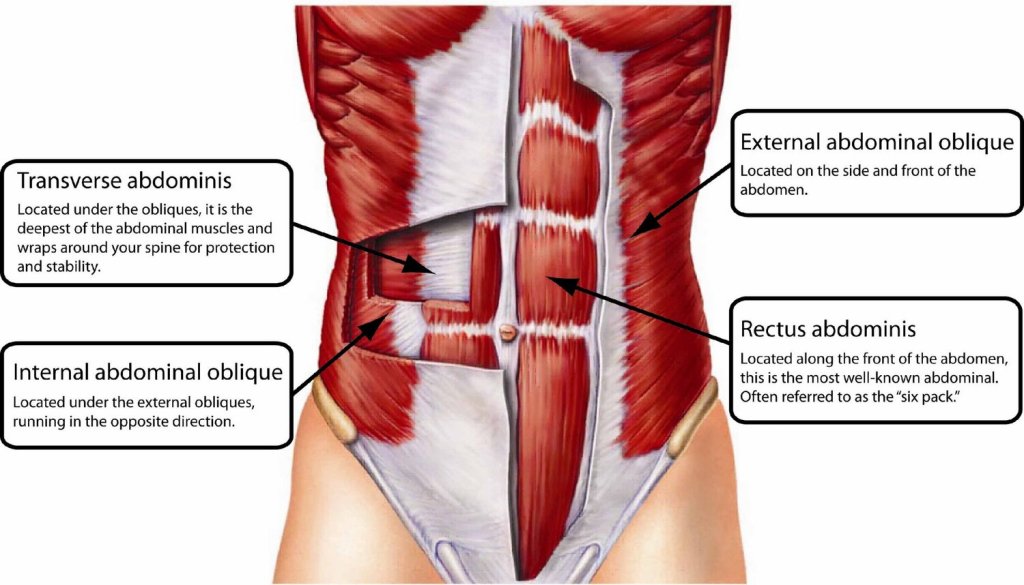
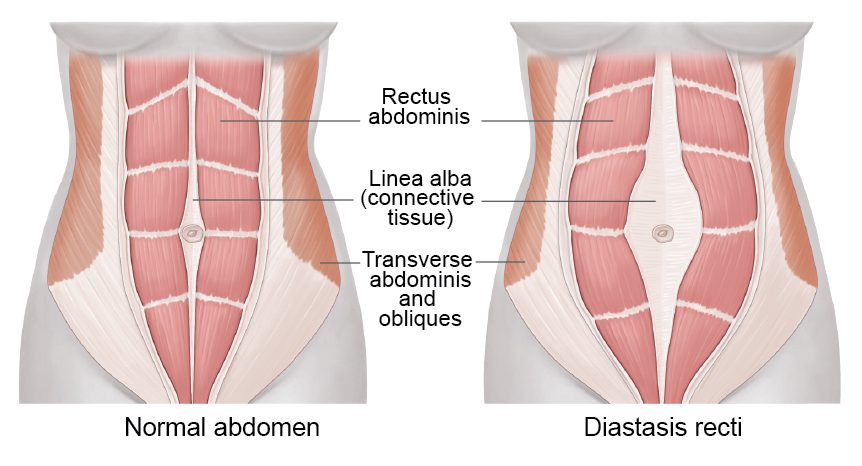
Lets start with getting to know the layers of your abdominal muscles. The four main muscle groups are the Rectus Abdominus, the External Obliques, the Internal Obliques, and the Transverse Abdominus. All of these muscles come together at your midline, called the linea alba, where connective tissue joins them together. During pregnancy, these muscles and connective tissue all stretch as baby grows within your abdomen, but at some point, when the abdominal muscles reach the limits of their elasticity, the connective tissue is forced to separate to accommodate the baby. This separation, or gap, is what we Diastasis Recti.
The degree of separation is dependent on several factors, some of which are under our control, some obviously are not. Engaging and strengthening the deeper layers of abdominal muscles in the correct ways during pregnancy actually decreases the occurrence and width of Diastasis Recti and improves the postpartum recovery.
The 6 main influences on the degree of separation are:
- Mother’s age, and the general elasticity of her connective tissue
- The amount of overall space in the mother’s thoracic cavity
- Weight gain/baby’s size during pregnancy
- Time frame between pregnancies, if applicable
- Abdominal strength before and after pregnancy
- Proper muscle engagement during daily activities.
If you are in the postpartum period (which is forever, by the way, after you have a baby), take heart and know that there are proven, actionable steps to heal your diastasis. No matter if you are 5 days postpartum or 15 years postpartum, there are things you can do to improve your core strength and improve or heal your diastasis.
The best starting point, no matter your stage or age, is in learning proper core engagement. Learning how to recruit and strengthen your pelvic floor and core muscles (during exercise and during everyday activities) as well as honing your breathing mechanism will lead to a combined effect that allows your body to regain its natural mind-muscle connection and support the healing of Diastasis Recti.
I hope this explanation was helpful, but more importantly, encouraging! If you know someone who could benefit from this information, it would mean the world to me if you share this post with them!
Now get out there and get ready for the ultimate mission of motherhood!
With care,
Kristen
 Naptime Fitness LLC